
|
Guibemantis albolineatus (Blommers-Schlösser & Blanc, 1991)
Subgenus: Pandanusicola | family: Mantellidae subfamily: Mantellinae genus: Guibemantis |
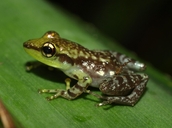 © 2011 Devin Edmonds (1 of 2) |
|
|



|
Description Similar species: Other species of the subgenus Distribution and Habitat Country distribution from AmphibiaWeb's database: Madagascar Life History, Abundance, Activity, and Special Behaviors Calls: Unknown.
Trends and Threats Possible reasons for amphibian decline Comments Taken with permission from Glaw and Vences (2007).
References
Glaw, F., and Vences, M. (2007). Field Guide to the Amphibians and Reptiles of Madagascar. Third Edition. Vences and Glaw Verlag, Köln.
Raxworthy, C. and Nussbaum R. (2008). Guibemantis albolineatus. In: IUCN 2008. 2008 IUCN Red List of Threatened Species. www.iucnredlist.org. Downloaded on 01 April 2009.
Species Account Citation: AmphibiaWeb 2009 Guibemantis albolineatus <https://amphibiaweb.org/species/4575> University of California, Berkeley, CA, USA. Accessed Apr 23, 2024.
Citation: AmphibiaWeb. 2024. <https://amphibiaweb.org> University of California, Berkeley, CA, USA. Accessed 23 Apr 2024.
AmphibiaWeb's policy on data use.
|
 Map of Life