
|
Pseudacris brimleyi Brandt & Walker, 1933
Brimley's Chorus Frog | family: Hylidae subfamily: Hylinae genus: Pseudacris |
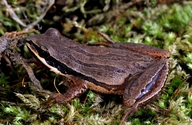 © 2011 Stephen Bennett (1 of 13) |
|
|


|
Description Distribution and Habitat Country distribution from AmphibiaWeb's database: United States U.S. state distribution from AmphibiaWeb's database: Georgia, North Carolina, South Carolina, Virginia
Life History, Abundance, Activity, and Special Behaviors
References
Hoffman, R. L. (1963). ''Pseudacris brimleyi.'' Catalogue of American Amphibians and Reptiles. American Society of Ichthyologists and Herpetologists, 311.1-311.2. Originally submitted by: April Robinson (first posted 2001-02-05) Species Account Citation: AmphibiaWeb 2001 Pseudacris brimleyi: Brimley's Chorus Frog <https://amphibiaweb.org/species/1053> University of California, Berkeley, CA, USA. Accessed Apr 16, 2024.
Feedback or comments about this page.
Citation: AmphibiaWeb. 2024. <https://amphibiaweb.org> University of California, Berkeley, CA, USA. Accessed 16 Apr 2024. AmphibiaWeb's policy on data use. |
 Map of Life